Asbestos in listed buildings needs careful handling: Southampton’s Old Town alone holds over ninety listed buildings and medieval churches, all heated and modernised through the twentieth century. That’s when the asbestos went in.
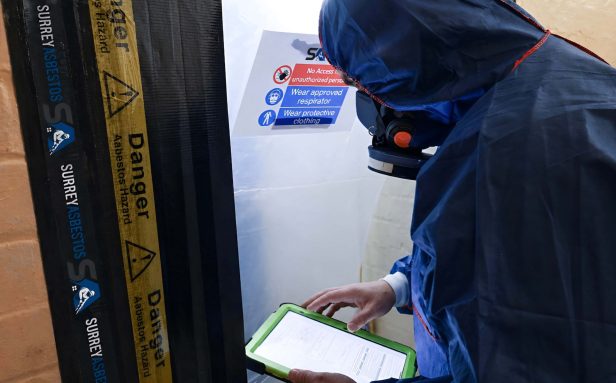
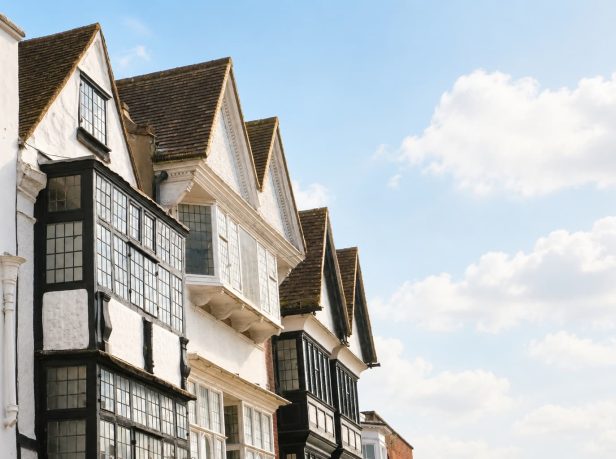
We plan heritage removals to satisfy both regimes at once: surveys recording historic fabric, methods protecting plasterwork, and paperwork both sides accept.
Safe asbestos removal listed UK
Architects, officers and church bodies alike
Every step satisfies both the HSE and the conservation officer before anything is touched, from the first survey through to a documented handover.

We identify and score the materials while mapping the historic fabric alongside them, so the removal plan knows exactly what it needs to protect, not just what it needs to remove

Method statements set out protection, access and reinstatement in detail, written specifically to support a listed building consent application wherever the works require one.

Hand techniques, precise enclosures and careful protection regimes treat a Georgian cornice or a medieval doorway with exactly the same seriousness as the fibre count.

You’ll receive clearances, consignment notes and a photographic record of the protected fabric, exactly the file your conservation officer, insurer and congregation will all want to see.
HSE compliance never becomes an excuse for heritage damage, and heritage sensitivity never becomes an excuse for cutting compliance corners
Operatives get briefed on what needs to survive the job, not just on what needs to be taken away
Conservation officers, diocesan bodies and heritage architects all get spoken to in language they actually use
Where material is genuinely safer left within the historic fabric, that's exactly what goes in writing
FAQS
Sometimes, yes. Removing a freestanding cement tank is one thing, while stripping a coating that’s bonded to historic plaster is quite another. The real test is whether the works affect the building’s special character, and we’ll flag that question early, with our method statement supporting the application wherever consent turns out to be needed.
Yes. Where the material is sound, undisturbed, and removal would actually damage significant fabric, asbestos encapsulation under a monitored plan is often the right answer under both regimes at once. That’s a legitimate outcome when it’s properly documented, not a way of dodging the issue.
With layered, reversible protection, localised enclosures rather than blanket sheeting wherever fabric is fragile, hand methods rather than mechanical ones, and reinstatement planned before we even remove the first fixing. It’s slower and more deliberate, but genuinely the only defensible way to do it.
With a survey, and a conversation with your architect brought in early. Crypt lagging is typically licensed-category work that needs careful enclosure design around monuments and fabric, entirely achievable, but best planned without a deadline hanging over it.
More care does mean more hours, so heritage work does carry a premium, but a proportionate one, fixed in writing just like everything else we do. The genuinely expensive route is standard-method removal followed by conservation repairs and an awkward conversation with the council afterward.
That’s our preference, not just something we can accommodate. Early collaboration produces the method statement, the consent case and the programme in one pass rather than several. We slot into your professional team rather than working around it.
The statutory consent question differs, but our method doesn’t change at all. Fabric-sensitive techniques and conservation-aware documentation apply wherever a building’s character genuinely matters, whether it’s formally listed or not.
A method statement detailing protection, access and reinstatement, photographic fabric records taken both before and after, and completion documentation confirming the works matched what was proposed. It’s written to support the consent file, not just to survive scrutiny of it.
Yes. From the medieval fabric of Southampton’s Old Town to Victorian churches and Georgian houses across the wider city, plus heritage buildings just beyond it where custodians want the same dual-regime care.
For enquiries related to our services, please reach out.
sales@southamptonasbestos.com
support@southamptonasbestos.com
Contact us for immediate assistance or questions.
Sales
07798 984290
Support / Enquiries
07468 437558
2 Park Rd
Guildford GU1 4PH
United Kingdom
CONTACT US
Send us your postcode and a photo of what you’ve found. We’ll arrange a survey within the week and confirm a fixed written quote inside 48 hours.
